what if
The boston tea party was an act where there was a rebellion. The boston people were angry becasue they could only get tea that came from boston. So they threw it overboard there was about 10,000 pounds worth of british tea.
If the Bostonians didn't throw the tea overboard. The British wouldn't have been as mad at them and there probally wouldn't have been fights. If the British did allow tea from other places than the British Probally would have been 10,000 pounds richer.
Less people would have died and the British would be happier for not loseing so much money. No matter what happend there still would have been tea from other countrys.
it was 176 years from the founding of the first English colony to the signing of the treaty of paris in that time we studied the powhatan uprising the pequot war king phils war french indian war pontiac rebellion american rev war write essay either explaing why war is nessacary example of human fault either essay should conclude with analysis of current war in iraq
wars are unnecessary there is not need for them
Thursday, June 12, 2008
Monday, June 9, 2008
valley forge letter
sorry forgot to post it viles
Dear: sister
How's the Weather in Saratoga New York. The weather been pretty nice around here. Are you still working on the farm? I am working with the heavy artillery stuff. We are located near the Schuylkill River. It is winter here. How is the weather up there? It has rained 13 days out of 6 weeks and it sucks.The first thing I had to do was help get the workers there tools to build the huts. I had to share a hut with 11 other men, with walls only 6 and a half feet tall. The huts were all cold and unhealthy. You are pretty much just sleeping on the ground. It was really hard to get food and clothes for the soldiers and officers. Transportation was the hardest though, because we had a lot of stuff to carry and they were not to light either. The main thing to do was to keep the soldiers and officers healthy so we can fight. We lost a lot of men due to illness. During the war we were building a hospital so we could take care of the people that were sick. The worst illness we had was small pox. I never got sick though I guess I’m just lucky.In march things started to get much better. There was more food and clothing. In early March there were 70 bakers that came and brought us all gingerbread, and some different food. In April there were schools running. Write back soon little sis. Your Brother,Fred
Dear: sister
How's the Weather in Saratoga New York. The weather been pretty nice around here. Are you still working on the farm? I am working with the heavy artillery stuff. We are located near the Schuylkill River. It is winter here. How is the weather up there? It has rained 13 days out of 6 weeks and it sucks.The first thing I had to do was help get the workers there tools to build the huts. I had to share a hut with 11 other men, with walls only 6 and a half feet tall. The huts were all cold and unhealthy. You are pretty much just sleeping on the ground. It was really hard to get food and clothes for the soldiers and officers. Transportation was the hardest though, because we had a lot of stuff to carry and they were not to light either. The main thing to do was to keep the soldiers and officers healthy so we can fight. We lost a lot of men due to illness. During the war we were building a hospital so we could take care of the people that were sick. The worst illness we had was small pox. I never got sick though I guess I’m just lucky.In march things started to get much better. There was more food and clothing. In early March there were 70 bakers that came and brought us all gingerbread, and some different food. In April there were schools running. Write back soon little sis. Your Brother,Fred

Thursday, May 22, 2008
Book Portfolio #4
As the Future Catches You
Juan Enriquez
1/1/02
this is book that talks about what the out look for jobs of the future are like probably truckers will be lower because of the gas prices and that is making some of them have to quit because they can't afford the gas and maintenance. people like scientist and nurses are going to be needed in the next 10 or 20 years because there is more people and nurses are needed and everyone is trying to find cures for everything like cancer and disease's the theme of the book wasn't like a regular theme because there wasn't really a story line behind it it was more of a historical book of what the big jobs of the past were and a hypothesis of what jobs are going to have an high demand.
this is a informational book of good job choices for the future it says that people who are self employed and have small businesses are going to have a harder time especially people that drive commercial trucks like loggers because there use a lot of fuel to run the equipment.
there is no theme in this book book its informational it talks about how back in the 80's there was a lot of people saying that the electronics company's would start booming and the predictions were right the people that were in the computer companies became millionaire's in weeks and then there was more new big companies like apple and they all became rich within weeks
this is a good book for people that want to know what would be possible good jobs for the future its a good book for people that are in high school and going to college becasue right now not many people are hireing and a lot of bussineses are laying people off its hard to find a good job even with some training
By: Sebastian Leeman
Juan Enriquez
1/1/02
this is book that talks about what the out look for jobs of the future are like probably truckers will be lower because of the gas prices and that is making some of them have to quit because they can't afford the gas and maintenance. people like scientist and nurses are going to be needed in the next 10 or 20 years because there is more people and nurses are needed and everyone is trying to find cures for everything like cancer and disease's the theme of the book wasn't like a regular theme because there wasn't really a story line behind it it was more of a historical book of what the big jobs of the past were and a hypothesis of what jobs are going to have an high demand.
this is a informational book of good job choices for the future it says that people who are self employed and have small businesses are going to have a harder time especially people that drive commercial trucks like loggers because there use a lot of fuel to run the equipment.
there is no theme in this book book its informational it talks about how back in the 80's there was a lot of people saying that the electronics company's would start booming and the predictions were right the people that were in the computer companies became millionaire's in weeks and then there was more new big companies like apple and they all became rich within weeks
this is a good book for people that want to know what would be possible good jobs for the future its a good book for people that are in high school and going to college becasue right now not many people are hireing and a lot of bussineses are laying people off its hard to find a good job even with some training
By: Sebastian Leeman
Wednesday, April 30, 2008
caesar rodney
* Born on October 7, 1728 – June 26, 1784 on his family's farm on St. Jones Neck, in Dover Hundred, Kent County, Delaware.
* An American lawyer.
* He was an officer of the Delaware militia during the French and Indian War and the American Revolution, a signer of the Declaration of Independence, a Continental Congressman from Delaware, and President of Delaware during most of the American Revolution.
* He deserves to go down in history because when Rodney served in the Continental Congress along with Thomas McKean and George Read from 1774 through 1776 Rodney was in Dover attending to Loyalist activity in Sussex County when he received word from Thomas McKean that he and George Read were deadlocked on the vote for independence to break that deadlock Rodney rode eighty miles through a thunderstorm on the night of July 1, 1776 dramatically arriving in Philadelphia July 2 just as the voting was beginning At least part of Rodney's famous ride was probably made in a carriage he voted with McKean and thereby allowed Delaware to join eleven other states in voting in favor of the resolution of independence the wording of the Declaration of Independence was approved two days later and Rodney signed the famous parchment copy on August 2.
* An American lawyer.
* He was an officer of the Delaware militia during the French and Indian War and the American Revolution, a signer of the Declaration of Independence, a Continental Congressman from Delaware, and President of Delaware during most of the American Revolution.
* He deserves to go down in history because when Rodney served in the Continental Congress along with Thomas McKean and George Read from 1774 through 1776 Rodney was in Dover attending to Loyalist activity in Sussex County when he received word from Thomas McKean that he and George Read were deadlocked on the vote for independence to break that deadlock Rodney rode eighty miles through a thunderstorm on the night of July 1, 1776 dramatically arriving in Philadelphia July 2 just as the voting was beginning At least part of Rodney's famous ride was probably made in a carriage he voted with McKean and thereby allowed Delaware to join eleven other states in voting in favor of the resolution of independence the wording of the Declaration of Independence was approved two days later and Rodney signed the famous parchment copy on August 2.
Wednesday, April 9, 2008
BOSTON MASSACRE
There was a fight between a mob and some soliders some people said that the general said fire but others say that he didn't say fire
Tuesday, April 1, 2008
book portfolio
Animal Farm
In Animal Farm by George Orwell Mr. Jones the owner of the manor farm was abusing the animals. He wasn’t feeding them right, he would whip them and he was drunk all the time. Old Major was a pig and he had a dream that the animals would soon run the farm without Mr. Jones. The animals took this to heart and soon ran him out of his house. A few pigs emerged as leaders, Snowball and Napoleon. Things ran smooth for a while. Snowball works at teaching the animals to read and write, Napoleon took some puppies away to teach them the ways of animalism. Then Snowball and Napoleon start fighting over every decision. Then at one meeting they were arguing and Napoleon has the dogs come in and chase Snowball off the farm. Napoleon keeps modifying the amendments that they made when they first started. Napoleon keeps becoming more and more like a human when they swore that no animal would ever be like a human. The theme of this book is don’t underestimate the true power of anything. The genre is an animal fable.
The author uses the characters to develop the theme. When the animals were under fed and over worked they rebelled against Mr. Jones and took over the farm. They also do this again when Mr. Jones tries to take the farm back by force. The animals have been ready and he underestimates them and gets kicked out again.
I have a connection with the theme of this book it is my dads old truck his 1989 f-150 2wd we hauled a 4 ton bulldozer on the trailer behind it, and we have hauled a ton and a half in the bed. The reason why I picked this is because it’s a f-150 and they are only suppose to haul half a ton in the bed and a ton and a half tongue weight and we exceeded both of those. So don’t underestimate the true power of a ford. Bet a GM vehicle wouldn’t be able to do that (FORD POWA).
George Orwell had a good theme the danger of the working class. The author didn’t make the characters believable because they were talking animals and humans could understand them. Mr. Jones wouldn’t just give up and let the animals take his farm from him. I think the author had a good theme but the characters could have been portrayed a little different.
By: Sebastian Leeman
In Animal Farm by George Orwell Mr. Jones the owner of the manor farm was abusing the animals. He wasn’t feeding them right, he would whip them and he was drunk all the time. Old Major was a pig and he had a dream that the animals would soon run the farm without Mr. Jones. The animals took this to heart and soon ran him out of his house. A few pigs emerged as leaders, Snowball and Napoleon. Things ran smooth for a while. Snowball works at teaching the animals to read and write, Napoleon took some puppies away to teach them the ways of animalism. Then Snowball and Napoleon start fighting over every decision. Then at one meeting they were arguing and Napoleon has the dogs come in and chase Snowball off the farm. Napoleon keeps modifying the amendments that they made when they first started. Napoleon keeps becoming more and more like a human when they swore that no animal would ever be like a human. The theme of this book is don’t underestimate the true power of anything. The genre is an animal fable.
The author uses the characters to develop the theme. When the animals were under fed and over worked they rebelled against Mr. Jones and took over the farm. They also do this again when Mr. Jones tries to take the farm back by force. The animals have been ready and he underestimates them and gets kicked out again.
I have a connection with the theme of this book it is my dads old truck his 1989 f-150 2wd we hauled a 4 ton bulldozer on the trailer behind it, and we have hauled a ton and a half in the bed. The reason why I picked this is because it’s a f-150 and they are only suppose to haul half a ton in the bed and a ton and a half tongue weight and we exceeded both of those. So don’t underestimate the true power of a ford. Bet a GM vehicle wouldn’t be able to do that (FORD POWA).
George Orwell had a good theme the danger of the working class. The author didn’t make the characters believable because they were talking animals and humans could understand them. Mr. Jones wouldn’t just give up and let the animals take his farm from him. I think the author had a good theme but the characters could have been portrayed a little different.
By: Sebastian Leeman
Notes w/ hyperlinks
Revolution and War
1763-1789
Revolution Notes
1763—Proclamation Act
1764—Grenville Acts (direct tax)
Sugar (molasses, wine)
Stamp
Quartering
Currency
Virtual/ Direct Representation
1765—Stamp Act Congress
Sons of Liberty
Samuel Adams
Paul Revere
John Hancock
Propaganda
Boycotts
Lobsters (Lobster-backs, Thomas Lobster)
1766—Declaratory Act
1767—Townsend Acts (indirect tax)
Charles Townsend
Writs of Assistance (search warrants)
Revenue used to pay Royal officials in the colonies
Tea Act (glass, paper, paint) support British East India Company
1770—Boston Massacre
March 5, 1770
Local reaction (primarily)
5 dead colonists
John Adams defends British soldiers/5 exonerated-2 convicted
Convicted men discharged and thumbs branded
1773—Boston Tea Party
November 30, 1773--Dartmouth sails into Boston Harbor
December 16, 1773--Tea dumped into harbor
340 chests of tea dumped (value of 10,000 British pounds)
1774—Intolerable Acts (Coercive Acts in Britain)
Close the port of Boston
Shut down Provincial and Town Governments
All offices appointed
Named General Thomas Gage as Governor
Gave all western lands north of the Ohio R. to Quebec, allowed Catholic Church to practice
1774—1st Continental Congress
September to October (7 weeks)
Carpenter’s Hall, Philadelphia
New England—John Adams, Paul Revere, Silas Deane
Virginia—Washington, Patrick Henry, Peyton Randolph, Richard Henry Lee
Pennsylvania—John Dickenson, Joseph Galloway (Plan for American council under Parliament, to avoid war)
New York—John Jay, James Duane
Maryland—Samuel Chase (future Supreme Court Justice), Charles Carroll (richest man in Maryland, Catholic)
Declaration of Rights—rejects Parliamentary authority over internal colonial affairs, colonies manage own defense, united aid to Boston if Intolerable Acts continue, absolute boycott of British goods to be enforced rigidly
1775— January
William Pitt urges Parliament to withdraw troops from America because the idea of managing the colonies through force was “too ridiculous to take up a moment of your lordships’ time”
1775—April 19 Lexington and Concord
Gen. Gage sends 700 men to Concord to seize the powder supplies
Paul Revere and William Dawes raise alarm the night before
Town of Lexington is on the way to Concord
Minutemen are assembled on the town common
“Shot heard round the world”
18 colonials killed and the rest run away
British march on to Concord and find the munitions were moved overnight
Minutemen ambush the British the whole way back to Boston
430 Redcoats make it back to Boston
30,000 Colonists surround Boston
1775—May
Gen. Howe, Gen. Clinton, Gen. Burgoyne
5,000 British troops
Ethan Allen, “Green Mountain Boys” seize Fort Ticonderoga
Henry Knox uses canon to lay siege on Boston
Benedict Arnold (Connecticut) takes Fort Crown Point to impede an invasion from Canada
1775—May 10, 2nd Continental Congress
Sam Adams pushes for Independence
John Dickenson (Penn.) urges restraint
Agree to form Colonial Army
Delegates unanimously agree to Washington as Commander of Continental Army (John Adams suggestion)
1775—June 17, “Battle of Bunker Hill”
Actually fought on Breed’s Hill
Gen. Howe leads assault without canon support (his canon had been matched with wrong-sized cannonballs [Amherst at Ticonderoga])
Militia waited to within 30 yards (some say 15 yards)
Militia target British officers
Militia ran extremely low on ammunition
On the third assault, led by Gen. Howe, British troops overtake the colonial position
Britain losses almost 1000 men (about half the attacking force)
Colonials lose about 500 men
1776—January, Common Sense
Written by Thomas Paine
120,000 copies sold in three months
1776—March
Gen. William Howe evacuates Boston
July 2, lands in Staten Island, New York (Loyalist base)
1776—Declaration of Independence
June 7, Richard Henry Lee (Virginia) introduces legislation to declare independence from Britain
Before voting on Lee’s proposal Congress appoints five-man committee to draft a formal Declaration of Independence (Thomas Jefferson, 33, does most of the writing)
June 28, Declaration presented to Congress
July 2, Congress approves Lee’s legislation to declare the United States of America independent of Great Britain
July 4, Congress officially adopts the Declaration of Independence
The Declaration intended to:
Undermine loyalty to King George III
Outline basic principles of representative government
Establish the “right” of rebellion
War
1776—August, Brooklyn Heights, New York
Largest Naval group Britain will launch until the 20th century
British victory, city falls to England
As winter came “sunshine patriots” left the American Army
Initial colonial enlistments due to expire
1776—December, Battle of Trenton
Howe believes war almost won
1,400 Hessians stationed at Trenton
Colonel Rall (Hessian) builds no fortifications
Washington “Crosses the Delaware” Christmas night
2,500 men; 18 artillery guns
Surprise attack at dawn
106 Hessians killed, 918 captured
No colonial casualties
Washington retreats in secret to avoid Gen. Cornwallis counter-attack
1777—January, Princeton
Washington ambushes British troops
Colonial victory establishes this will not be a quick war for Britain
1777—September-October, Saratoga
Gen. Burgoyne plans a three-prong attack on colonials at Albany
Plan does not consider the terrain, forcing British troops to march through swamps, lakes, hills and forests full of rebels
Two of the three “prongs” never arrive (Howe goes to Philadelphia instead, St. Leger retreats to New York afraid of Benedict Arnold)
Sept. Burgoyne crosses Hudson River
Oct. 17, Burgoyne surrenders
Establishes American Army as real threat
Helps secure open French Alliance
Turning Point of the War
1777-1778—Winter at Valley Forge
Under-funded troops
Low morale
10,000+ troops
4,000 troops listed as “unfit for duty” due to poor supplies (boots, blankets, coats, etc.)
2,500 troops die of disease (typhus, typhoid fever, dysentery, pneumonia)
George Washington mentioned a lack of shoes so severe that the men's "marches might be tracked by the blood from their feet”
Local farmers would sell produce to Brits who could pay cash
1779—February, Vincennes
1780—August, Camden
1780—October, Kings Mountain
1781—October, Yorktown
British Gen. Cornwallis
American Gen. Washington (also “Mad” Anthony Wayne, Baron von Steuben)
French Gen. Rochambeau (also Marquis de Lafayette)
Essentially a French Naval victory
Last significant battle of the war
1783—Sept. 3, Treaty of Paris
Britain recognizes American independence
America gets all land from Atlantic coast to Miss. River, Great Lakes to Florida
Fishing rights to the Gulf of Saint Lawrence and off the coast of Newfoundland
America must pay debts to Britain
American congress would “earnestly recommend” all Loyalist property returned (States ignore this request)
Samuel Adams
Paul Revere
John Hancock
Charles Townsend
Patrick Henry
Silas Deane
Peyton Randolph
Richard Henry Lee
John Dickenson
Joseph Galloway
John Jay
James Duane
Samuel Chase
William Pitt
1763-1789
Revolution Notes
1763—Proclamation Act
1764—Grenville Acts (direct tax)
Sugar (molasses, wine)
Stamp
Quartering
Currency
Virtual/ Direct Representation
1765—Stamp Act Congress
Sons of Liberty
Samuel Adams
Paul Revere
John Hancock
Propaganda
Boycotts
Lobsters (Lobster-backs, Thomas Lobster)
1766—Declaratory Act
1767—Townsend Acts (indirect tax)
Charles Townsend
Writs of Assistance (search warrants)
Revenue used to pay Royal officials in the colonies
Tea Act (glass, paper, paint) support British East India Company
1770—Boston Massacre
March 5, 1770
Local reaction (primarily)
5 dead colonists
John Adams defends British soldiers/5 exonerated-2 convicted
Convicted men discharged and thumbs branded
1773—Boston Tea Party
November 30, 1773--Dartmouth sails into Boston Harbor
December 16, 1773--Tea dumped into harbor
340 chests of tea dumped (value of 10,000 British pounds)
1774—Intolerable Acts (Coercive Acts in Britain)
Close the port of Boston
Shut down Provincial and Town Governments
All offices appointed
Named General Thomas Gage as Governor
Gave all western lands north of the Ohio R. to Quebec, allowed Catholic Church to practice
1774—1st Continental Congress
September to October (7 weeks)
Carpenter’s Hall, Philadelphia
New England—John Adams, Paul Revere, Silas Deane
Virginia—Washington, Patrick Henry, Peyton Randolph, Richard Henry Lee
Pennsylvania—John Dickenson, Joseph Galloway (Plan for American council under Parliament, to avoid war)
New York—John Jay, James Duane
Maryland—Samuel Chase (future Supreme Court Justice), Charles Carroll (richest man in Maryland, Catholic)
Declaration of Rights—rejects Parliamentary authority over internal colonial affairs, colonies manage own defense, united aid to Boston if Intolerable Acts continue, absolute boycott of British goods to be enforced rigidly
1775— January
William Pitt urges Parliament to withdraw troops from America because the idea of managing the colonies through force was “too ridiculous to take up a moment of your lordships’ time”
1775—April 19 Lexington and Concord
Gen. Gage sends 700 men to Concord to seize the powder supplies
Paul Revere and William Dawes raise alarm the night before
Town of Lexington is on the way to Concord
Minutemen are assembled on the town common
“Shot heard round the world”
18 colonials killed and the rest run away
British march on to Concord and find the munitions were moved overnight
Minutemen ambush the British the whole way back to Boston
430 Redcoats make it back to Boston
30,000 Colonists surround Boston
1775—May
Gen. Howe, Gen. Clinton, Gen. Burgoyne
5,000 British troops
Ethan Allen, “Green Mountain Boys” seize Fort Ticonderoga
Henry Knox uses canon to lay siege on Boston
Benedict Arnold (Connecticut) takes Fort Crown Point to impede an invasion from Canada
1775—May 10, 2nd Continental Congress
Sam Adams pushes for Independence
John Dickenson (Penn.) urges restraint
Agree to form Colonial Army
Delegates unanimously agree to Washington as Commander of Continental Army (John Adams suggestion)
1775—June 17, “Battle of Bunker Hill”
Actually fought on Breed’s Hill
Gen. Howe leads assault without canon support (his canon had been matched with wrong-sized cannonballs [Amherst at Ticonderoga])
Militia waited to within 30 yards (some say 15 yards)
Militia target British officers
Militia ran extremely low on ammunition
On the third assault, led by Gen. Howe, British troops overtake the colonial position
Britain losses almost 1000 men (about half the attacking force)
Colonials lose about 500 men
1776—January, Common Sense
Written by Thomas Paine
120,000 copies sold in three months
1776—March
Gen. William Howe evacuates Boston
July 2, lands in Staten Island, New York (Loyalist base)
1776—Declaration of Independence
June 7, Richard Henry Lee (Virginia) introduces legislation to declare independence from Britain
Before voting on Lee’s proposal Congress appoints five-man committee to draft a formal Declaration of Independence (Thomas Jefferson, 33, does most of the writing)
June 28, Declaration presented to Congress
July 2, Congress approves Lee’s legislation to declare the United States of America independent of Great Britain
July 4, Congress officially adopts the Declaration of Independence
The Declaration intended to:
Undermine loyalty to King George III
Outline basic principles of representative government
Establish the “right” of rebellion
War
1776—August, Brooklyn Heights, New York
Largest Naval group Britain will launch until the 20th century
British victory, city falls to England
As winter came “sunshine patriots” left the American Army
Initial colonial enlistments due to expire
1776—December, Battle of Trenton
Howe believes war almost won
1,400 Hessians stationed at Trenton
Colonel Rall (Hessian) builds no fortifications
Washington “Crosses the Delaware” Christmas night
2,500 men; 18 artillery guns
Surprise attack at dawn
106 Hessians killed, 918 captured
No colonial casualties
Washington retreats in secret to avoid Gen. Cornwallis counter-attack
1777—January, Princeton
Washington ambushes British troops
Colonial victory establishes this will not be a quick war for Britain
1777—September-October, Saratoga
Gen. Burgoyne plans a three-prong attack on colonials at Albany
Plan does not consider the terrain, forcing British troops to march through swamps, lakes, hills and forests full of rebels
Two of the three “prongs” never arrive (Howe goes to Philadelphia instead, St. Leger retreats to New York afraid of Benedict Arnold)
Sept. Burgoyne crosses Hudson River
Oct. 17, Burgoyne surrenders
Establishes American Army as real threat
Helps secure open French Alliance
Turning Point of the War
1777-1778—Winter at Valley Forge
Under-funded troops
Low morale
10,000+ troops
4,000 troops listed as “unfit for duty” due to poor supplies (boots, blankets, coats, etc.)
2,500 troops die of disease (typhus, typhoid fever, dysentery, pneumonia)
George Washington mentioned a lack of shoes so severe that the men's "marches might be tracked by the blood from their feet”
Local farmers would sell produce to Brits who could pay cash
1779—February, Vincennes
1780—August, Camden
1780—October, Kings Mountain
1781—October, Yorktown
British Gen. Cornwallis
American Gen. Washington (also “Mad” Anthony Wayne, Baron von Steuben)
French Gen. Rochambeau (also Marquis de Lafayette)
Essentially a French Naval victory
Last significant battle of the war
1783—Sept. 3, Treaty of Paris
Britain recognizes American independence
America gets all land from Atlantic coast to Miss. River, Great Lakes to Florida
Fishing rights to the Gulf of Saint Lawrence and off the coast of Newfoundland
America must pay debts to Britain
American congress would “earnestly recommend” all Loyalist property returned (States ignore this request)
Samuel Adams
Paul Revere
John Hancock
Charles Townsend
Patrick Henry
Silas Deane
Peyton Randolph
Richard Henry Lee
John Dickenson
Joseph Galloway
John Jay
James Duane
Samuel Chase
William Pitt
Friday, March 14, 2008
Movie Notes
Notes Assignment for ASI You have already used the American History search engine from the class blog to create hyperlinks for all of the names in the notes for the quarter (I know most of you have not finished this yet.) The next task with the notes is to add primary images to the notes in the appropriate area of the notes. For instance, the famous propaganda picture by Paul Revere of the Boston Massacre should be added to the section of the notes outlining the massacre. Similarly, primary images should be added for:
Propaganda picture showing resistance to at least one of the Grenville or Townsend Acts
Paul Revere's picture of the Boston Massacre
Image of The Boston Tea Party
At least one general propaganda poster urging the colonies to unite
Image of Thomas Paine or Image of the Front page of Common Sense
Image of the Declaration of Independence
Image of Washington Crossing the Delaware (Battle of Trenton)*
Image of Valley Forge*
Image from the Battle of Yorktown*All images should be of the era (produced near the time of the event) unless the event has an " * " at the end. These images can be from later.
Revolution and War
1763-1789
Revolution Notes
1763—Proclamation Act
1764—Grenville Acts (direct tax)
Sugar (molasses, wine)
Stamp
Quartering
Currency
Virtual/ Direct Representation
1765—Stamp Act Congress
Sons of Liberty
Samuel Adams
Paul Revere
John Hancock
Propaganda
Boycotts
Lobsters (Lobster-backs, Thomas Lobster)
1766—Declaratory Act
1767—Townsend Acts (indirect tax)
Charles Townsend
Writs of Assistance (search warrants)
Revenue used to pay Royal officials in the colonies
Tea Act (glass, paper, paint) support British East India Company
1770—Boston Massacre
March 5, 1770
Local reaction (primarily)
5 dead colonists
John Adams defends British soldiers/5 exonerated-2 convicted
Convicted men discharged and thumbs branded
1773—Boston Tea Party
November 30, 1773--Dartmouth sails into Boston Harbor
December 16, 1773--Tea dumped into harbor
340 chests of tea dumped (value of 10,000 British pounds)
1774—Intolerable Acts (Coercive Acts in Britain)
Close the port of Boston
Shut down Provincial and Town Governments
All offices appointed
Named General Thomas Gage as Governor
Gave all western lands north of the Ohio R. to Quebec, allowed Catholic Church to practice
1774—1st Continental Congress
September to October (7 weeks)
Carpenter’s Hall, Philadelphia
New England—John Adams, Paul Revere, Silas Deane
Virginia—Washington, Patrick Henry, Peyton Randolph, Richard Henry Lee
Pennsylvania—John Dickenson, Joseph Galloway (Plan for American council under Parliament, to avoid war)
New York—John Jay, James Duane
Maryland—Samuel Chase (future Supreme Court Justice), Charles Carroll (richest man in Maryland, Catholic)
Declaration of Rights—rejects Parliamentary authority over internal colonial affairs, colonies manage own defense, united aid to Boston if Intolerable Acts continue, absolute boycott of British goods to be enforced rigidly
1775— January
William Pitt urges Parliament to withdraw troops from America because the idea of managing the colonies through force was “too ridiculous to take up a moment of your lordships’ time”
1775—April 19 Lexington and Concord
Gen. Gage sends 700 men to Concord to seize the powder supplies
Paul Revere and William Dawes raise alarm the night before
Town of Lexington is on the way to Concord
Minutemen are assembled on the town common
“Shot heard round the world”
18 colonials killed and the rest run away
British march on to Concord and find the munitions were moved overnight
Minutemen ambush the British the whole way back to Boston
430 Redcoats make it back to Boston
30,000 Colonists surround Boston
1775—May
Gen. Howe, Gen. Clinton, Gen. Burgoyne
5,000 British troops
Ethan Allen, “Green Mountain Boys” seize Fort Ticonderoga
Henry Knox uses canon to lay siege on Boston
Benedict Arnold (Connecticut) takes Fort Crown Point to impede an invasion from Canada
1775—May 10, 2nd Continental Congress
Sam Adams pushes for Independence
John Dickenson (Penn.) urges restraint
Agree to form Colonial Army
Delegates unanimously agree to Washington as Commander of Continental Army (John Adams suggestion)
1775—June 17, “Battle of Bunker Hill”
Actually fought on Breed’s Hill
Gen. Howe leads assault without canon support (his canon had been matched with wrong-sized cannonballs [Amherst at Ticonderoga])
Militia waited to within 30 yards (some say 15 yards)
Militia target British officers
Militia ran extremely low on ammunition
On the third assault, led by Gen. Howe, British troops overtake the colonial position
Britain losses almost 1000 men (about half the attacking force)
Colonials lose about 500 men
1776—January, Common Sense
Written by Thomas Paine
120,000 copies sold in three months
1776—March
Gen. William Howe evacuates Boston
July 2, lands in Staten Island, New York (Loyalist base)
1776—Declaration of Independence
June 7, Richard Henry Lee (Virginia) introduces legislation to declare independence from Britain
Before voting on Lee’s proposal Congress appoints five-man committee to draft a formal Declaration of Independence (Thomas Jefferson, 33, does most of the writing)
June 28, Declaration presented to Congress
July 2, Congress approves Lee’s legislation to declare the United States of America independent of Great Britain
July 4, Congress officially adopts the Declaration of Independence
The Declaration intended to:
Undermine loyalty to King George III
Outline basic principles of representative government
Establish the “right” of rebellion
War
1776—August, Brooklyn Heights, New York
Largest Naval group Britain will launch until the 20th century
British victory, city falls to England
As winter came “sunshine patriots” left the American Army
Initial colonial enlistments due to expire
1776—December, Battle of Trenton
Howe believes war almost won
1,400 Hessians stationed at Trenton
Colonel Rall (Hessian) builds no fortifications
Washington “Crosses the Delaware” Christmas night
2,500 men; 18 artillery guns
Surprise attack at dawn
106 Hessians killed, 918 captured
No colonial casualties
Washington retreats in secret to avoid Gen. Cornwallis counter-attack
1777—January, Princeton
Washington ambushes British troops
Colonial victory establishes this will not be a quick war for Britain
1777—September-October, Saratoga
Gen. Burgoyne plans a three-prong attack on colonials at Albany
Plan does not consider the terrain, forcing British troops to march through swamps, lakes, hills and forests full of rebels
Two of the three “prongs” never arrive (Howe goes to Philadelphia instead, St. Leger retreats to New York afraid of Benedict Arnold)
Sept. Burgoyne crosses Hudson River
Oct. 17, Burgoyne surrenders
Establishes American Army as real threat
Helps secure open French Alliance
Turning Point of the War
1777-1778—Winter at Valley Forge
Under-funded troops
Low morale
10,000+ troops
4,000 troops listed as “unfit for duty” due to poor supplies (boots, blankets, coats, etc.)
2,500 troops die of disease (typhus, typhoid fever, dysentery, pneumonia)
George Washington mentioned a lack of shoes so severe that the men's "marches might be tracked by the blood from their feet”
Local farmers would sell produce to Brits who could pay cash
1779—February, Vincennes
1780—August, Camden
1780—October, Kings Mountain
1781—October, Yorktown
British Gen. Cornwallis
American Gen. Washington (also “Mad” Anthony Wayne, Baron von Steuben)
French Gen. Rochambeau (also Marquis de Lafayette)
Essentially a French Naval victory
Last significant battle of the war
1783—Sept. 3, Treaty of Paris
Britain recognizes American independence
America gets all land from Atlantic coast to Miss. River, Great Lakes to Florida
Fishing rights to the Gulf of Saint Lawrence and off the coast of Newfoundland
America must pay debts to Britain
American congress would “earnestly recommend” all Loyalist property returned (States ignore this request)
Posted by Mr. Viles at 6:42 AM
Labels: American Revolution
Monday, March 31, 2008
John Adams
This is the link to more John Adams information.
Propaganda picture showing resistance to at least one of the Grenville or Townsend Acts
Paul Revere's picture of the Boston Massacre
Image of The Boston Tea Party
At least one general propaganda poster urging the colonies to unite
Image of Thomas Paine or Image of the Front page of Common Sense
Image of the Declaration of Independence
Image of Washington Crossing the Delaware (Battle of Trenton)*
Image of Valley Forge*
Image from the Battle of Yorktown*All images should be of the era (produced near the time of the event) unless the event has an " * " at the end. These images can be from later.
Revolution and War
1763-1789
Revolution Notes
1763—Proclamation Act
1764—Grenville Acts (direct tax)
Sugar (molasses, wine)
Stamp
Quartering
Currency
Virtual/ Direct Representation
1765—Stamp Act Congress
Sons of Liberty
Samuel Adams
Paul Revere
John Hancock
Propaganda
Boycotts
Lobsters (Lobster-backs, Thomas Lobster)
1766—Declaratory Act
1767—Townsend Acts (indirect tax)
Charles Townsend
Writs of Assistance (search warrants)
Revenue used to pay Royal officials in the colonies
Tea Act (glass, paper, paint) support British East India Company
1770—Boston Massacre
March 5, 1770
Local reaction (primarily)
5 dead colonists
John Adams defends British soldiers/5 exonerated-2 convicted
Convicted men discharged and thumbs branded
1773—Boston Tea Party
November 30, 1773--Dartmouth sails into Boston Harbor
December 16, 1773--Tea dumped into harbor
340 chests of tea dumped (value of 10,000 British pounds)
1774—Intolerable Acts (Coercive Acts in Britain)
Close the port of Boston
Shut down Provincial and Town Governments
All offices appointed
Named General Thomas Gage as Governor
Gave all western lands north of the Ohio R. to Quebec, allowed Catholic Church to practice
1774—1st Continental Congress
September to October (7 weeks)
Carpenter’s Hall, Philadelphia
New England—John Adams, Paul Revere, Silas Deane
Virginia—Washington, Patrick Henry, Peyton Randolph, Richard Henry Lee
Pennsylvania—John Dickenson, Joseph Galloway (Plan for American council under Parliament, to avoid war)
New York—John Jay, James Duane
Maryland—Samuel Chase (future Supreme Court Justice), Charles Carroll (richest man in Maryland, Catholic)
Declaration of Rights—rejects Parliamentary authority over internal colonial affairs, colonies manage own defense, united aid to Boston if Intolerable Acts continue, absolute boycott of British goods to be enforced rigidly
1775— January
William Pitt urges Parliament to withdraw troops from America because the idea of managing the colonies through force was “too ridiculous to take up a moment of your lordships’ time”
1775—April 19 Lexington and Concord
Gen. Gage sends 700 men to Concord to seize the powder supplies
Paul Revere and William Dawes raise alarm the night before
Town of Lexington is on the way to Concord
Minutemen are assembled on the town common
“Shot heard round the world”
18 colonials killed and the rest run away
British march on to Concord and find the munitions were moved overnight
Minutemen ambush the British the whole way back to Boston
430 Redcoats make it back to Boston
30,000 Colonists surround Boston
1775—May
Gen. Howe, Gen. Clinton, Gen. Burgoyne
5,000 British troops
Ethan Allen, “Green Mountain Boys” seize Fort Ticonderoga
Henry Knox uses canon to lay siege on Boston
Benedict Arnold (Connecticut) takes Fort Crown Point to impede an invasion from Canada
1775—May 10, 2nd Continental Congress
Sam Adams pushes for Independence
John Dickenson (Penn.) urges restraint
Agree to form Colonial Army
Delegates unanimously agree to Washington as Commander of Continental Army (John Adams suggestion)
1775—June 17, “Battle of Bunker Hill”
Actually fought on Breed’s Hill
Gen. Howe leads assault without canon support (his canon had been matched with wrong-sized cannonballs [Amherst at Ticonderoga])
Militia waited to within 30 yards (some say 15 yards)
Militia target British officers
Militia ran extremely low on ammunition
On the third assault, led by Gen. Howe, British troops overtake the colonial position
Britain losses almost 1000 men (about half the attacking force)
Colonials lose about 500 men
1776—January, Common Sense
Written by Thomas Paine
120,000 copies sold in three months
1776—March
Gen. William Howe evacuates Boston
July 2, lands in Staten Island, New York (Loyalist base)
1776—Declaration of Independence
June 7, Richard Henry Lee (Virginia) introduces legislation to declare independence from Britain
Before voting on Lee’s proposal Congress appoints five-man committee to draft a formal Declaration of Independence (Thomas Jefferson, 33, does most of the writing)
June 28, Declaration presented to Congress
July 2, Congress approves Lee’s legislation to declare the United States of America independent of Great Britain
July 4, Congress officially adopts the Declaration of Independence
The Declaration intended to:
Undermine loyalty to King George III
Outline basic principles of representative government
Establish the “right” of rebellion
War
1776—August, Brooklyn Heights, New York
Largest Naval group Britain will launch until the 20th century
British victory, city falls to England
As winter came “sunshine patriots” left the American Army
Initial colonial enlistments due to expire
1776—December, Battle of Trenton
Howe believes war almost won
1,400 Hessians stationed at Trenton
Colonel Rall (Hessian) builds no fortifications
Washington “Crosses the Delaware” Christmas night
2,500 men; 18 artillery guns
Surprise attack at dawn
106 Hessians killed, 918 captured
No colonial casualties
Washington retreats in secret to avoid Gen. Cornwallis counter-attack
1777—January, Princeton
Washington ambushes British troops
Colonial victory establishes this will not be a quick war for Britain
1777—September-October, Saratoga
Gen. Burgoyne plans a three-prong attack on colonials at Albany
Plan does not consider the terrain, forcing British troops to march through swamps, lakes, hills and forests full of rebels
Two of the three “prongs” never arrive (Howe goes to Philadelphia instead, St. Leger retreats to New York afraid of Benedict Arnold)
Sept. Burgoyne crosses Hudson River
Oct. 17, Burgoyne surrenders
Establishes American Army as real threat
Helps secure open French Alliance
Turning Point of the War
1777-1778—Winter at Valley Forge
Under-funded troops
Low morale
10,000+ troops
4,000 troops listed as “unfit for duty” due to poor supplies (boots, blankets, coats, etc.)
2,500 troops die of disease (typhus, typhoid fever, dysentery, pneumonia)
George Washington mentioned a lack of shoes so severe that the men's "marches might be tracked by the blood from their feet”
Local farmers would sell produce to Brits who could pay cash
1779—February, Vincennes
1780—August, Camden
1780—October, Kings Mountain
1781—October, Yorktown
British Gen. Cornwallis
American Gen. Washington (also “Mad” Anthony Wayne, Baron von Steuben)
French Gen. Rochambeau (also Marquis de Lafayette)
Essentially a French Naval victory
Last significant battle of the war
1783—Sept. 3, Treaty of Paris
Britain recognizes American independence
America gets all land from Atlantic coast to Miss. River, Great Lakes to Florida
Fishing rights to the Gulf of Saint Lawrence and off the coast of Newfoundland
America must pay debts to Britain
American congress would “earnestly recommend” all Loyalist property returned (States ignore this request)
Posted by Mr. Viles at 6:42 AM
Labels: American Revolution
Monday, March 31, 2008
John Adams
This is the link to more John Adams information.
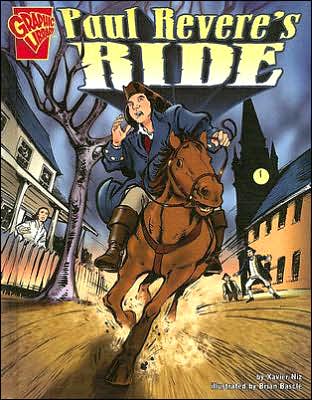 paul revere
 paul revere
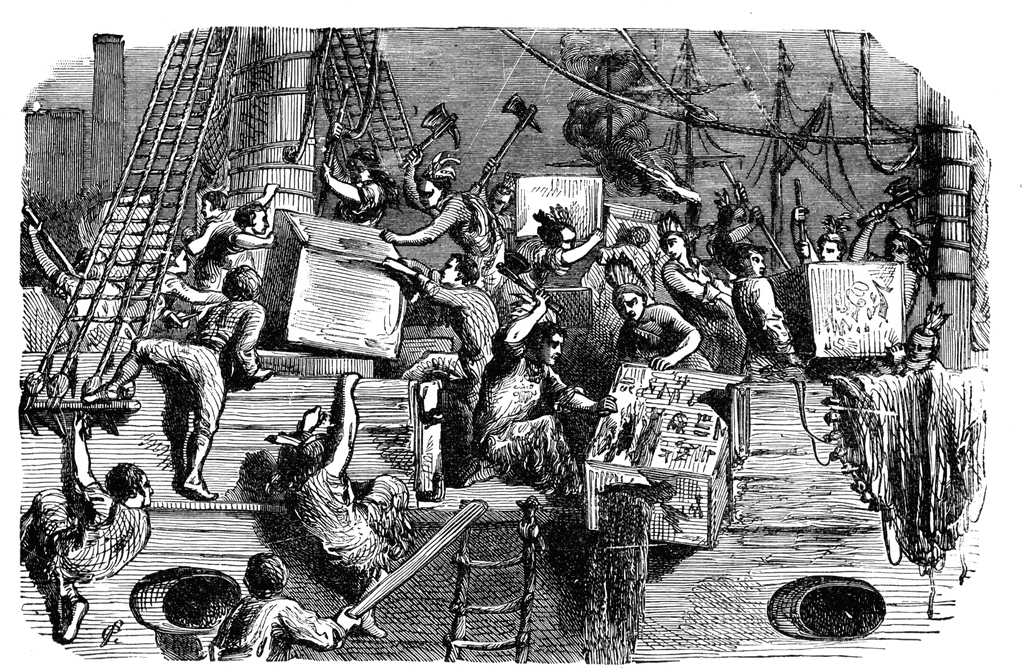 Boston Tea Party
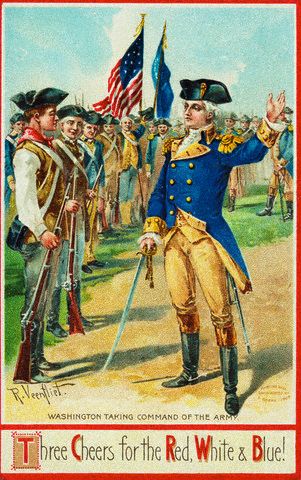 propaganda poster urging the colonies to unite
 Thomas Paine
 Declaration of Independence
 Washington Crossing the Delaware (Battle of Trenton)*
 Valley Forge
 Battle of Yorktown*
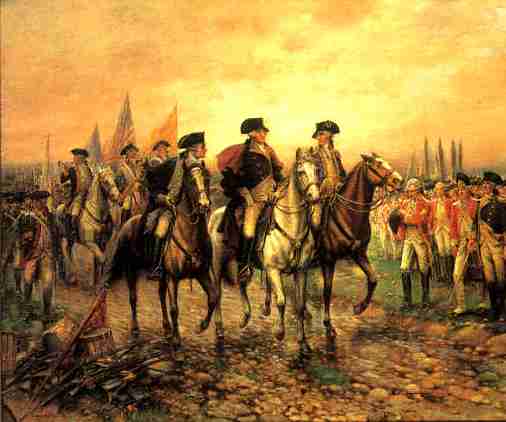 Battle of Yorktown*

Tuesday, March 4, 2008
exam 2
I. Introduction
A. Thesis statement [sample: The founding of English colonies in modern Massachusetts combined a strange mix of idealism and violence.]
B. Preview first major point (without support) [Miles Standish contributed important protection to the early colonies by using violence.]
C. Preview second major point (without support) [ Benjamin Church provided vital leadership to protect the colonies during King Philip's War.]
D. Preview third major point (without support) [Despite all of this violence, the colonies were also founded on religious idealism.]
E. Significance of Thesis [It is important to understand the full history of these areas because this is what Americans generally consider to be our nation's beginning.]
II. First Major Point
A. Statement of position (or point)
B. Detail of support
C. Detail of Support
D. Detail of Support
E. Significance of position (how it relates to thesis?)
III. Second Major Point
A. Statement of position (or point)
B. Detail of support
C. Detail of Support
D. Detail of Support
E. Significance of position (how it relates to thesis?)
IV. Third Major Point
A. Statement of position (or point)
B. Detail of support
C. Detail of Support
D. Detail of Support
E. Significance of position (how it relates to thesis?)
V. Conclusion
A. Restate thesis (not re-write)
B. Restate significance of first position
C. Restate significance of second position
D. Restate significance of third position
E. Summary of paper (why is it important)
The founding of English colonies in modern Massachusetts combined a strange mix of idealism and violence. Miles Standish contributed important protection to the early colonies by using violence. Benjamin Church provided vital leadership to protect the colonies during King Philip's War. Despite all of this violence, the colonies were also founded on religious idealism. It is important to understand the full history of these areas because this is what Americans generally consider to be our nation's beginning.
Miles Standish contributed important protection to the early colonies by using violence. He always intimidated everyone like there was this one person that he threatened with a knife and a said they were going to marry each other. he did a sneak attack on one of the Indian places and scared them so bad that some of them tried to run through the walls.
Benjamin Church provided vital leadership to protect the colonies during King Philip's War. He and his men and they were all around a bog and captured him. Church cut off Phillips head and put in on a pole it was decaying for 15 years. Church took Phillips hand and preserved it in rum.
Despite all of this violence, the colonies were also founded on religious idealism. the Pilgrims wanted to have free religion. they wanted more land. they wanted to have a house on top of a hill so that everyone could see them and were hoping that everyone would act like them.
It is important to understand the entire history of the areas of America and is consider to be our nation's beginning. the Pilgrims were the first settlers to come to America. they are known as the founders of America. the Pilgrams didn't come over here to kill the indians they came over to origionally get gold, find the northway passage or find India which is why we call the indians indians.
A. Thesis statement [sample: The founding of English colonies in modern Massachusetts combined a strange mix of idealism and violence.]
B. Preview first major point (without support) [Miles Standish contributed important protection to the early colonies by using violence.]
C. Preview second major point (without support) [ Benjamin Church provided vital leadership to protect the colonies during King Philip's War.]
D. Preview third major point (without support) [Despite all of this violence, the colonies were also founded on religious idealism.]
E. Significance of Thesis [It is important to understand the full history of these areas because this is what Americans generally consider to be our nation's beginning.]
II. First Major Point
A. Statement of position (or point)
B. Detail of support
C. Detail of Support
D. Detail of Support
E. Significance of position (how it relates to thesis?)
III. Second Major Point
A. Statement of position (or point)
B. Detail of support
C. Detail of Support
D. Detail of Support
E. Significance of position (how it relates to thesis?)
IV. Third Major Point
A. Statement of position (or point)
B. Detail of support
C. Detail of Support
D. Detail of Support
E. Significance of position (how it relates to thesis?)
V. Conclusion
A. Restate thesis (not re-write)
B. Restate significance of first position
C. Restate significance of second position
D. Restate significance of third position
E. Summary of paper (why is it important)
The founding of English colonies in modern Massachusetts combined a strange mix of idealism and violence. Miles Standish contributed important protection to the early colonies by using violence. Benjamin Church provided vital leadership to protect the colonies during King Philip's War. Despite all of this violence, the colonies were also founded on religious idealism. It is important to understand the full history of these areas because this is what Americans generally consider to be our nation's beginning.
Miles Standish contributed important protection to the early colonies by using violence. He always intimidated everyone like there was this one person that he threatened with a knife and a said they were going to marry each other. he did a sneak attack on one of the Indian places and scared them so bad that some of them tried to run through the walls.
Benjamin Church provided vital leadership to protect the colonies during King Philip's War. He and his men and they were all around a bog and captured him. Church cut off Phillips head and put in on a pole it was decaying for 15 years. Church took Phillips hand and preserved it in rum.
Despite all of this violence, the colonies were also founded on religious idealism. the Pilgrims wanted to have free religion. they wanted more land. they wanted to have a house on top of a hill so that everyone could see them and were hoping that everyone would act like them.
It is important to understand the entire history of the areas of America and is consider to be our nation's beginning. the Pilgrims were the first settlers to come to America. they are known as the founders of America. the Pilgrams didn't come over here to kill the indians they came over to origionally get gold, find the northway passage or find India which is why we call the indians indians.
Thursday, February 14, 2008
They are gentle, loving, faithful, lacking in all guile and trickery. The words denoting lying, deceit, greed, envy, slander, and forgiveness have never been heard. They have no jealousy, no sense of possession.--John Smith (character)


We shall make a new start. A fresh beginning. Here the blessings of the earth are bestowed upon all. None need grow poor. Here there is good ground for all, and no cost but one's labor. We shall build a true common wealth, hard work and self reliance our virtues. We shall have no landlords to rack us with high rents or extort the fruit of our labor. --John Smith (character)
Friday, January 25, 2008
Wounded knee illustrates events in a long series of violent conflicts motivated by racism, disrespect and lack of understanding. In a youtube viedo. In the viedo there is some people that take a trip the the wounded knee monument. In another youtube video we saw a bunch of stuff about the 7th cavalry today. That is showing the peope today still remember Colonel Custer and what he did and that shows that being a impact in our lives still today.
Does wounded knee illustrate events in a long series of violent conflicts motivated by racism, disrespect and lack of understanding? Today we still have some violence that is powered by racism. There is more racism in the south than there is in the north and Martin Luther King Jr. is another example of racism. There is still a lot of disrespect in the world like people that are of different religions.
Does wounded knee illustrate events in a long series of violent conflicts motivated by racism, disrespect and lack of understanding. There will always be racism in the world because the world is not nice. There is always some people out there that are mean and there will always be disrespect because some people are jerks. Not everyone understands like some people have problems and everyone picks on them and there will be very few people that will accect that person.
Does wounded knee illustrate events in a long series of violent conflicts motivated by racism, disrespect and lack of understanding? Today we still have some violence that is powered by racism. There is more racism in the south than there is in the north and Martin Luther King Jr. is another example of racism. There is still a lot of disrespect in the world like people that are of different religions.
Does wounded knee illustrate events in a long series of violent conflicts motivated by racism, disrespect and lack of understanding. There will always be racism in the world because the world is not nice. There is always some people out there that are mean and there will always be disrespect because some people are jerks. Not everyone understands like some people have problems and everyone picks on them and there will be very few people that will accect that person.
wonded knee outline
I. Thesis
a. source 1
b. source 2
c. source 3
d. restate thesis and significance
II. Body paragraph
a. restate thesis
b. detail
c. detail
d. detail
e. significance
III. conclusion
a. restate thesis
b. lesson learned
c. significance
a. source 1
b. source 2
c. source 3
d. restate thesis and significance
II. Body paragraph
a. restate thesis
b. detail
c. detail
d. detail
e. significance
III. conclusion
a. restate thesis
b. lesson learned
c. significance
Thursday, January 17, 2008
book portfolio
Sebastian Leeman
English 10
Mr. Middleswart
1/17/08
Of Mice and Men
Everyone has a American dream. It’s a opinion, different people have different opinions. For some people its fame for some its money there is no one American Dream because everyone has there own. In the book Of Mice and Men by John Steinbeck it’s a Historical fiction about migrant workers in the early 1900’s and late 1800’s. The theme of this book everyone has a American Dream? The importance of this theme is friends and money. The reason its important is because life without friends or money wouldn’t be very fun, because if you have friends then you have someone to talk to and you will not be lonely. With money you would be able to live in a nice house and do whatever. This story takes place in the late 1800’s or early 1900’s there are migrant workers. Lennie and George they run out of weed get a job at a ranch Curleys wife dies and Lennie dies.
In this book the main characters are George and Lennie. George is the brains of the two he is short and skinny. He is the one that always make the plans of where they go he figures out a place to work. Lennie is fat, tall, not so bright and is very strong. He can’t keep mouse more then a day without killing it because he pets them too hard and he was feelings Curleys wife’s hair and she started too scream so he shook her and broke her neck They are both trying to get money to live on a little farm and have some livestock and bunnies that is there American Dream.
This book has a believable theme because everyone has there own American Dream. My idea of the American dream would be to have money. Because then I could help out my family and friends. An example of an American dream that happens a lot is reality TV. Like American idol people that want to have fame and live there dream of Fame go on American Idol. That is an easier way of living the American Dream for singers.
The author wrote this to show that the American Dream is something that not everyone could have because the world is not a perfect place. The characters were believable because they were migrant workers way back in the day. That had the same dream that most of the other migrant workers had. They went and worked on a ranch for fifty dollars a month. They were saving up to get a house with a little piece of land. To have some cows, chickens and bunnies. This is a very believable theme because everyone has a different American Dream. An example from the book would be the farm that George and Lennie always talked about throughout the book Of Mice and Men by John Steinbeck the theme is everyone has a American Dream.
English 10
Mr. Middleswart
1/17/08
Of Mice and Men
Everyone has a American dream. It’s a opinion, different people have different opinions. For some people its fame for some its money there is no one American Dream because everyone has there own. In the book Of Mice and Men by John Steinbeck it’s a Historical fiction about migrant workers in the early 1900’s and late 1800’s. The theme of this book everyone has a American Dream? The importance of this theme is friends and money. The reason its important is because life without friends or money wouldn’t be very fun, because if you have friends then you have someone to talk to and you will not be lonely. With money you would be able to live in a nice house and do whatever. This story takes place in the late 1800’s or early 1900’s there are migrant workers. Lennie and George they run out of weed get a job at a ranch Curleys wife dies and Lennie dies.
In this book the main characters are George and Lennie. George is the brains of the two he is short and skinny. He is the one that always make the plans of where they go he figures out a place to work. Lennie is fat, tall, not so bright and is very strong. He can’t keep mouse more then a day without killing it because he pets them too hard and he was feelings Curleys wife’s hair and she started too scream so he shook her and broke her neck They are both trying to get money to live on a little farm and have some livestock and bunnies that is there American Dream.
This book has a believable theme because everyone has there own American Dream. My idea of the American dream would be to have money. Because then I could help out my family and friends. An example of an American dream that happens a lot is reality TV. Like American idol people that want to have fame and live there dream of Fame go on American Idol. That is an easier way of living the American Dream for singers.
The author wrote this to show that the American Dream is something that not everyone could have because the world is not a perfect place. The characters were believable because they were migrant workers way back in the day. That had the same dream that most of the other migrant workers had. They went and worked on a ranch for fifty dollars a month. They were saving up to get a house with a little piece of land. To have some cows, chickens and bunnies. This is a very believable theme because everyone has a different American Dream. An example from the book would be the farm that George and Lennie always talked about throughout the book Of Mice and Men by John Steinbeck the theme is everyone has a American Dream.
Wednesday, January 16, 2008
final essay
it was rough becuase there was nazis and if you were against hitler you would get shot by them
because they would end up using the people that was with them and if people didn't vote for hitler there would be people that would follow them out and beat them becuase hitler was to win the election because they were afraid because there was a lot of the nazis and they just didn't want to start a rebellion.
by: Sebastian Leeman
because they would end up using the people that was with them and if people didn't vote for hitler there would be people that would follow them out and beat them becuase hitler was to win the election because they were afraid because there was a lot of the nazis and they just didn't want to start a rebellion.
by: Sebastian Leeman
Thursday, January 10, 2008
local hiatory
Etna- Little Town Little Info
Sebastian Leeman
English per. 4
Mr. Middleswart
December 16, 2007
Sebastian Leeman Leeman 1
English 10
Mr. Middleswart
December 16, 2007
Etna- Little Town Little Info
For those of you that have been to Etna, you know that it’s a very small town and doesn’t have very many businesses at all. Most of the ones Etna does have not many people know about, like Family’s Yarns and Lighthouse Leather. Etna has a small population, and Etna isn’t really known for anything other than a bunch of rednecks. However, there is more to Etna: there is an interstate that runs through the middle of town, and Etna had a few technological changes over the years. This paper will focus on the local businesses, how the technology has changed over the years, and also the famous person in Etna.
Etna wasn’t always called Etna. In 1820, it became Etna, the 156th town in Maine and before that in 1807 it was called Crosbytown because it was a township (4R2 NWP) owned by General John Crosby from Hampden. The first people to settle here were Dr. Benj. Friend, Phineas Friend, James Harding, Dennis and Reuben Deimett, and Bela, Asa and Calvin Sylvester. The reason that people came to Etna was because the soil was rich in nutrient and loamy and clayey which would keep the moisture in the ground (“History of Etna Maine”). Then later in 1826 Etna parted off some land and formed Plymouth then
Leeman 2
later in 1866 in again parted off into Carmel. Etna was the last town to be made before Maine became Maine (“Maine Local Government”).
You might not really think it was that long ago, but phones haven’t been out forever here in Etna. We didn’t get phones on the secondary roads until 1981 and they weren’t like they are now. Then after that, they had the switchboard where you cranked the phone and said “operator, operator” and the operator would come on the line. Then you would tell them who you wanted to talk to and they would plug you in, and that was how the phone worked. They were party lines (Reynolds). People would share the same phone line and you would have to listen to how many times the phone rang and that would depend on who the call was for, like it would ring 2 times or 4 times and anyone could pick it up. So if you had nosey neighbors then you had to be careful what you said (Reynolds). Then they got the one where you had to turn the dial because they hadn’t come out with the push buttons yet. So, some of the technology has changed in Etna within the last twenty of thirty years (Reynolds). The reason why it took so long for all the other roads in Etna to get telephones was because the other roads were all secondary and the towns people complained, and then they finally got telephones. But, every household had to pay 30 dollars to get the phone line run through town.
They’re hasn’t always been a interstate in Maine, and there never was before the 40’s. The part of the interstate that goes through Etna was made in the late 50’s and my Grampie helped work on it. He clear cut where the interstate is and they burnt the brush then they hauled off the wood that was good. After all the trees were picked up, he hauled in gravel for the base. There was a lot of gravel that needed to be hauled in, because the
Leeman 3
interstate was raised way above where it once was. They had them raised so they could put in bridges and it would help in case of an accident. If one car was headed over to the other side it wouldn’t have a very good chance of making it to the other side (Reynolds). The interstate had quite an impact on our lives because it made it a lot easier to travel across the state and the secondary roads weren’t so cluttered. It was really convenient, especially for the big trucks.
There isn’t very many big businesses in Etna. There is a couple though, there is Lighthouse Leather, which began in 1998 there is 2 employees, they do upholstery. Bucks Nursery began in 1988 and has 5 employees, they do landscaping, sell stuff for landscaping and sell plants. Conant’s apple orchard started in 1978 and there is 4 employees. They have self pick and they also sell pumpkins and sell apples pre-picked. Family Yarns was started in 1998 and 21 people work there. Family Yarns is one of few woolen mills left in Maine. Ken Gould Well Drilling began in 1973; he is self-employed he drills wells. Etna Store started in 2001 and has 7 employees, and Hill View Mini Barns started in 1999 and has 6 employees, they make mini barns and they make custom barns. The Etna fire department began in 1877, but it was just recently suspended because the fire chief was going over the speed limit and running red lights and put it on Youtube, and one of the people on the town board found it, but now the fire department is up and running again and we have a new fire chief.
The famous person for Etna isn’t famous for a good reason; he was a killer. His name is James Hicks. “The remains of a third victim of convicted killer James Hicks were located after two days of digging at roadside sites in Aroostook County, Maine. The
Leeman 4
remains of two other victims were discovered earlier in the week at Hicks' former home in Etna. In 1983, Hicks, 49, was convicted of killing his first wife, Jennie Hicks, who disappeared in 1977 and was never seen again until two days ago. Hicks served six years in prison for her murder. Maine authorities have also suspected him in the disappearance of two other women ‹- 34-year-old Jerilyn Towers of Newport in 1982, and 40-year-old Lynn Willette of Orrington in 1996 -- but never had enough evidence to charge him with murder” (Morgue Archive). He lived in Etna and killed his first wife after he was remarried. He ended up going to prison for 6 years. Then he was also accused of killing two more people Jerilyn Towers and Lynn Willette but didn’t go to jail because there was no proof. It’s said they he cut up the body of one of them and put her in 5 gallon buckets and buried her near the interstate. Right now James is in a prison in Texas.
Works cited
"MORGUE ARCHIVES - OCTOBER, 2000." 2 Jan. 2008.
"Maine Local Government." Maine Local Government. 2004. 16 Dec. 2007
Reynolds, Herb. Personal interview. 16 Dec. 2007
Varney, Geo. J. "History of Etna Maine." History of Etna Maine. 1886. A Gazetteer of The. 16 Dec. 2007.
Sebastian Leeman
English per. 4
Mr. Middleswart
December 16, 2007
Sebastian Leeman Leeman 1
English 10
Mr. Middleswart
December 16, 2007
Etna- Little Town Little Info
For those of you that have been to Etna, you know that it’s a very small town and doesn’t have very many businesses at all. Most of the ones Etna does have not many people know about, like Family’s Yarns and Lighthouse Leather. Etna has a small population, and Etna isn’t really known for anything other than a bunch of rednecks. However, there is more to Etna: there is an interstate that runs through the middle of town, and Etna had a few technological changes over the years. This paper will focus on the local businesses, how the technology has changed over the years, and also the famous person in Etna.
Etna wasn’t always called Etna. In 1820, it became Etna, the 156th town in Maine and before that in 1807 it was called Crosbytown because it was a township (4R2 NWP) owned by General John Crosby from Hampden. The first people to settle here were Dr. Benj. Friend, Phineas Friend, James Harding, Dennis and Reuben Deimett, and Bela, Asa and Calvin Sylvester. The reason that people came to Etna was because the soil was rich in nutrient and loamy and clayey which would keep the moisture in the ground (“History of Etna Maine”). Then later in 1826 Etna parted off some land and formed Plymouth then
Leeman 2
later in 1866 in again parted off into Carmel. Etna was the last town to be made before Maine became Maine (“Maine Local Government”).
You might not really think it was that long ago, but phones haven’t been out forever here in Etna. We didn’t get phones on the secondary roads until 1981 and they weren’t like they are now. Then after that, they had the switchboard where you cranked the phone and said “operator, operator” and the operator would come on the line. Then you would tell them who you wanted to talk to and they would plug you in, and that was how the phone worked. They were party lines (Reynolds). People would share the same phone line and you would have to listen to how many times the phone rang and that would depend on who the call was for, like it would ring 2 times or 4 times and anyone could pick it up. So if you had nosey neighbors then you had to be careful what you said (Reynolds). Then they got the one where you had to turn the dial because they hadn’t come out with the push buttons yet. So, some of the technology has changed in Etna within the last twenty of thirty years (Reynolds). The reason why it took so long for all the other roads in Etna to get telephones was because the other roads were all secondary and the towns people complained, and then they finally got telephones. But, every household had to pay 30 dollars to get the phone line run through town.
They’re hasn’t always been a interstate in Maine, and there never was before the 40’s. The part of the interstate that goes through Etna was made in the late 50’s and my Grampie helped work on it. He clear cut where the interstate is and they burnt the brush then they hauled off the wood that was good. After all the trees were picked up, he hauled in gravel for the base. There was a lot of gravel that needed to be hauled in, because the
Leeman 3
interstate was raised way above where it once was. They had them raised so they could put in bridges and it would help in case of an accident. If one car was headed over to the other side it wouldn’t have a very good chance of making it to the other side (Reynolds). The interstate had quite an impact on our lives because it made it a lot easier to travel across the state and the secondary roads weren’t so cluttered. It was really convenient, especially for the big trucks.
There isn’t very many big businesses in Etna. There is a couple though, there is Lighthouse Leather, which began in 1998 there is 2 employees, they do upholstery. Bucks Nursery began in 1988 and has 5 employees, they do landscaping, sell stuff for landscaping and sell plants. Conant’s apple orchard started in 1978 and there is 4 employees. They have self pick and they also sell pumpkins and sell apples pre-picked. Family Yarns was started in 1998 and 21 people work there. Family Yarns is one of few woolen mills left in Maine. Ken Gould Well Drilling began in 1973; he is self-employed he drills wells. Etna Store started in 2001 and has 7 employees, and Hill View Mini Barns started in 1999 and has 6 employees, they make mini barns and they make custom barns. The Etna fire department began in 1877, but it was just recently suspended because the fire chief was going over the speed limit and running red lights and put it on Youtube, and one of the people on the town board found it, but now the fire department is up and running again and we have a new fire chief.
The famous person for Etna isn’t famous for a good reason; he was a killer. His name is James Hicks. “The remains of a third victim of convicted killer James Hicks were located after two days of digging at roadside sites in Aroostook County, Maine. The
Leeman 4
remains of two other victims were discovered earlier in the week at Hicks' former home in Etna. In 1983, Hicks, 49, was convicted of killing his first wife, Jennie Hicks, who disappeared in 1977 and was never seen again until two days ago. Hicks served six years in prison for her murder. Maine authorities have also suspected him in the disappearance of two other women ‹- 34-year-old Jerilyn Towers of Newport in 1982, and 40-year-old Lynn Willette of Orrington in 1996 -- but never had enough evidence to charge him with murder” (Morgue Archive). He lived in Etna and killed his first wife after he was remarried. He ended up going to prison for 6 years. Then he was also accused of killing two more people Jerilyn Towers and Lynn Willette but didn’t go to jail because there was no proof. It’s said they he cut up the body of one of them and put her in 5 gallon buckets and buried her near the interstate. Right now James is in a prison in Texas.
Works cited
"MORGUE ARCHIVES - OCTOBER, 2000." 2 Jan. 2008
"Maine Local Government." Maine Local Government. 2004. 16 Dec. 2007
Reynolds, Herb. Personal interview. 16 Dec. 2007
Varney, Geo. J. "History of Etna Maine." History of Etna Maine. 1886. A Gazetteer of The. 16 Dec. 2007
Subscribe to:
Posts (Atom)